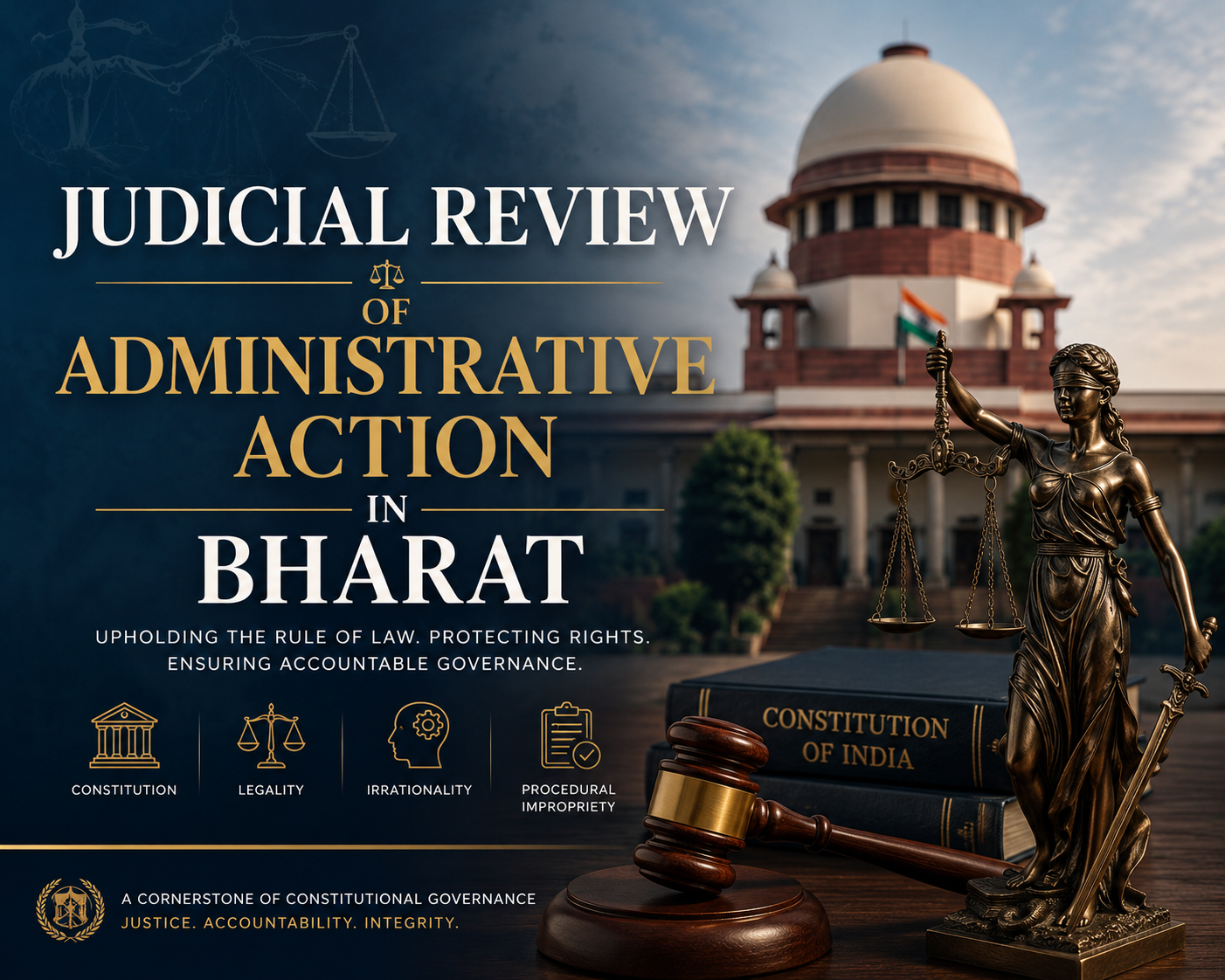
It is a foundational constitutional mechanism that ensures government authorities wield their powers within legal boundaries and avoid discretionary abuse. Rooted in Articles 32 and 226 of the Constitution, this doctrine empowers the Supreme Court and High Courts to issue writs against unlawful administrative conduct, thereby upholding the rule of law and protecting individual rights.
The scope of judicial review in Bharat rests on three classic grounds — illegality, irrationality, and procedural impropriety — commonly termed the Wednesbury principles, inspired by the UK case Associated Provincial Picture Houses v. Wednesbury Corporation.
In practical application, judicial review strikes a balance between able governance and protection of the rights of citizens. It checks arbitrary powers while respecting administrative expertise by adopting a deferential stance in specific matters. Seminal cases have solidified the role of the judiciary in curbing administrative excesses, shaping a robust checks-and-balances system. Modern jurisprudence incorporates proportionality and legitimate expectation as supplementary review grounds, aligning Bharatiya law with global administrative trends. These cases collectively refined the intensity and scope of judicial review, shaping a jurisprudence that balances judicial vigilance with administrative autonomy.
Impact and Challenges
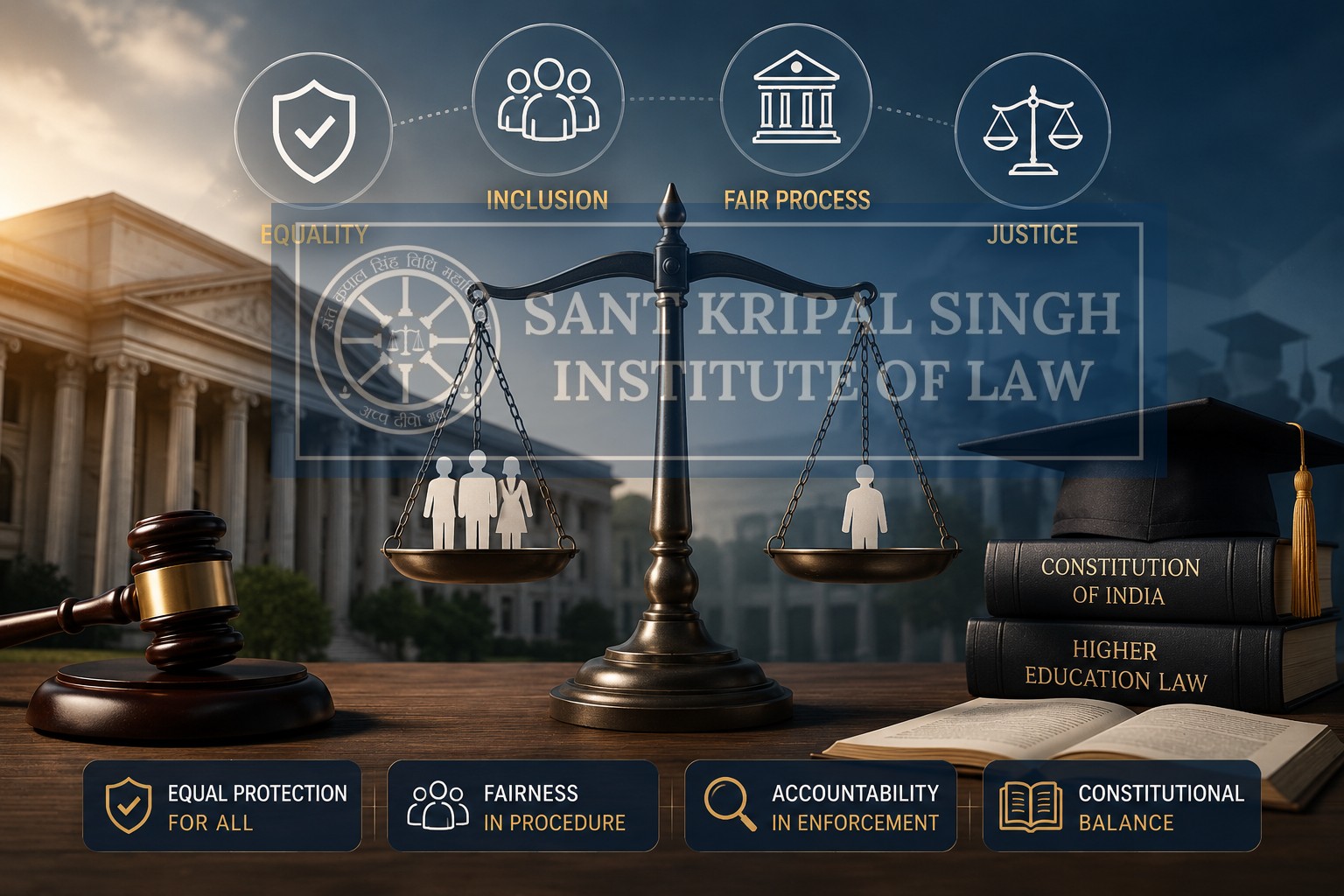
Judicial review fosters democratic accountability, transparency, and trust in public institutions, compelling administrators to justify actions legally and ethically. However, excessive intervention risks causing delays and administrative paralysis, necessitating a nuanced approach respecting the separation of powers. Emerging challenges include. managing judicial activism versus administrative efficiency, especially in fields like environment and public health where expert discretion is vital.
Reforms and Future Directions
Scholars advocate codifying review standards to provide clearer benchmarks for courts and administrators, enhancing predictability and reducing overreach. Recommended measures include legislative guidelines on reviewability and training programmes for bureaucrats on natural justice. Such reforms aim to streamline judicial processes while preserving the protective essence of review.
Conclusion
Judicial review of administrative action in Bharat is essential for safeguarding constitutional values and ensuring governance adheres to legal standards. Its effective implementation demands a balanced approach that merges rigorous oversight with respect for administrative discretion, thereby promoting justice and competent public administration. As India’s legal environment evolves, refining judicial review principles will remain crucial to address emerging administrative law challenges. Judicial review of administrative action is a cornerstone of our country’s constitutional framework, ensuring that government authorities act within the bounds of law and do not abuse their discretionary powers. The principle empowers courts to scrutinize decisions made by administrative bodies, thereby upholding the rule of law and protecting the rights of citizens.
Related Case Laws :
1. Kesavananda Bharati v. State of Kerala (1973): Established the Basic Structure Doctrine, including judicial review.
2. S.P. Gupta v. Union of India (1981): Established judicial review of administrative actions and expanded locus standi in PILs.
3. L. Chandra Kumar v. Union of India (1997): Held that judicial review is a basic feature of the Constitution and tribunals’ decisions are subject to High Court scrutiny.
4. Minerva Mills Ltd. v. Union of India (1980): Reinforced judicial review of administrative actions to ensure constitutional validity.
5. Rustom Cavasjee Cooper v. Union of India (1970) Judicial review of administrative actions affecting fundamental rights.
6. State of Rajasthan v. Union of India (1977) Judicial review of executive actions.
7. A.K. Kraipak v. Union of India (1969) Principles of natural justice in administrative actions.
8. S.N. Mukherjee v. Union of India (1990) Reasoned orders in administrative decisions.
9. Bihar Eastern Gangetic Fishermen Co-operative Society v. Sipahi Singh (1977) Judicial review of administrative discretion.
10. Union of India v. Tulsiram Patel (1985) Administrative actions and natural justice.
~Pradip Kumar (Assistant Professor)
Join SKSIL Law College and gain hands-on experience with the latest legal technology.