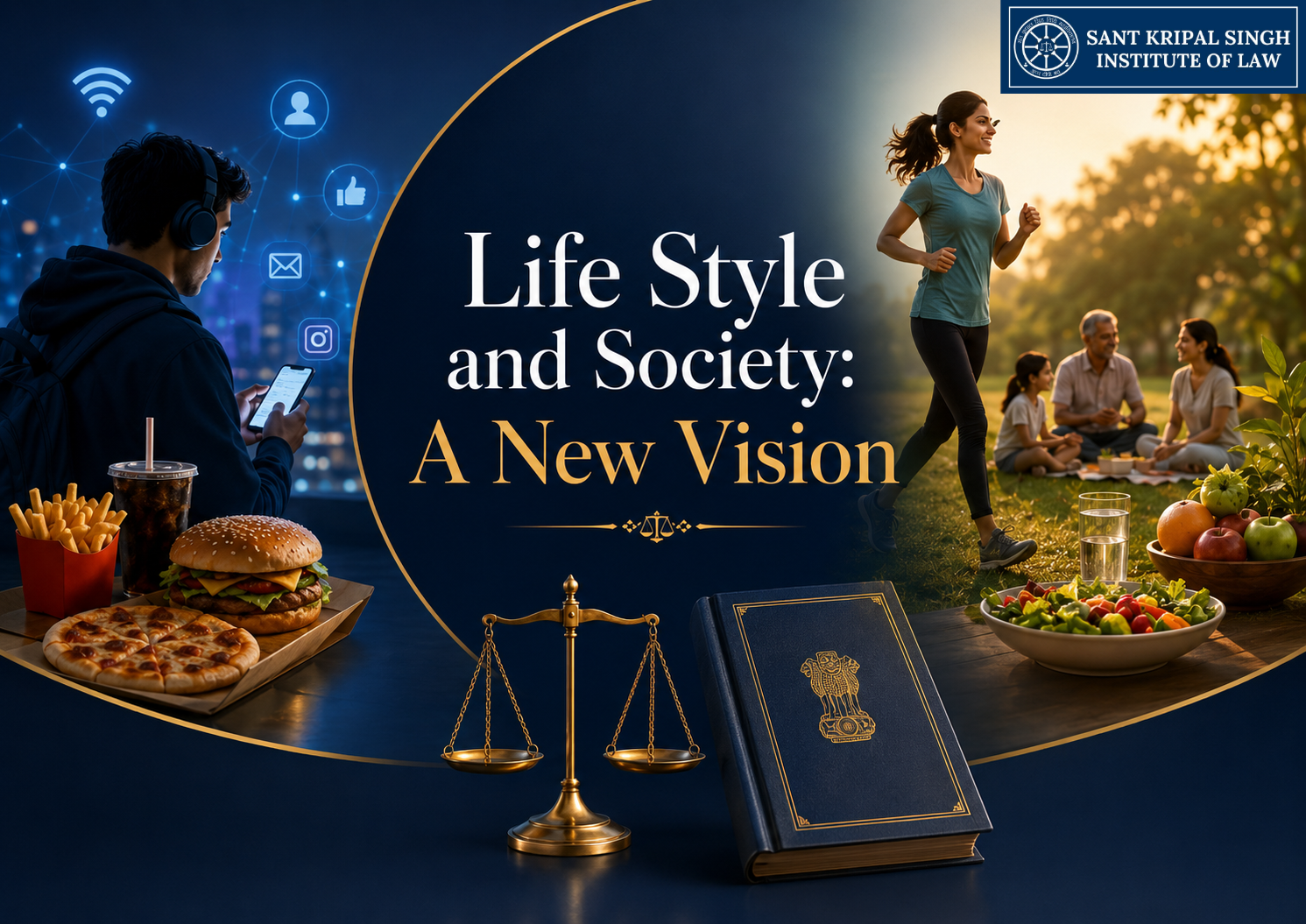
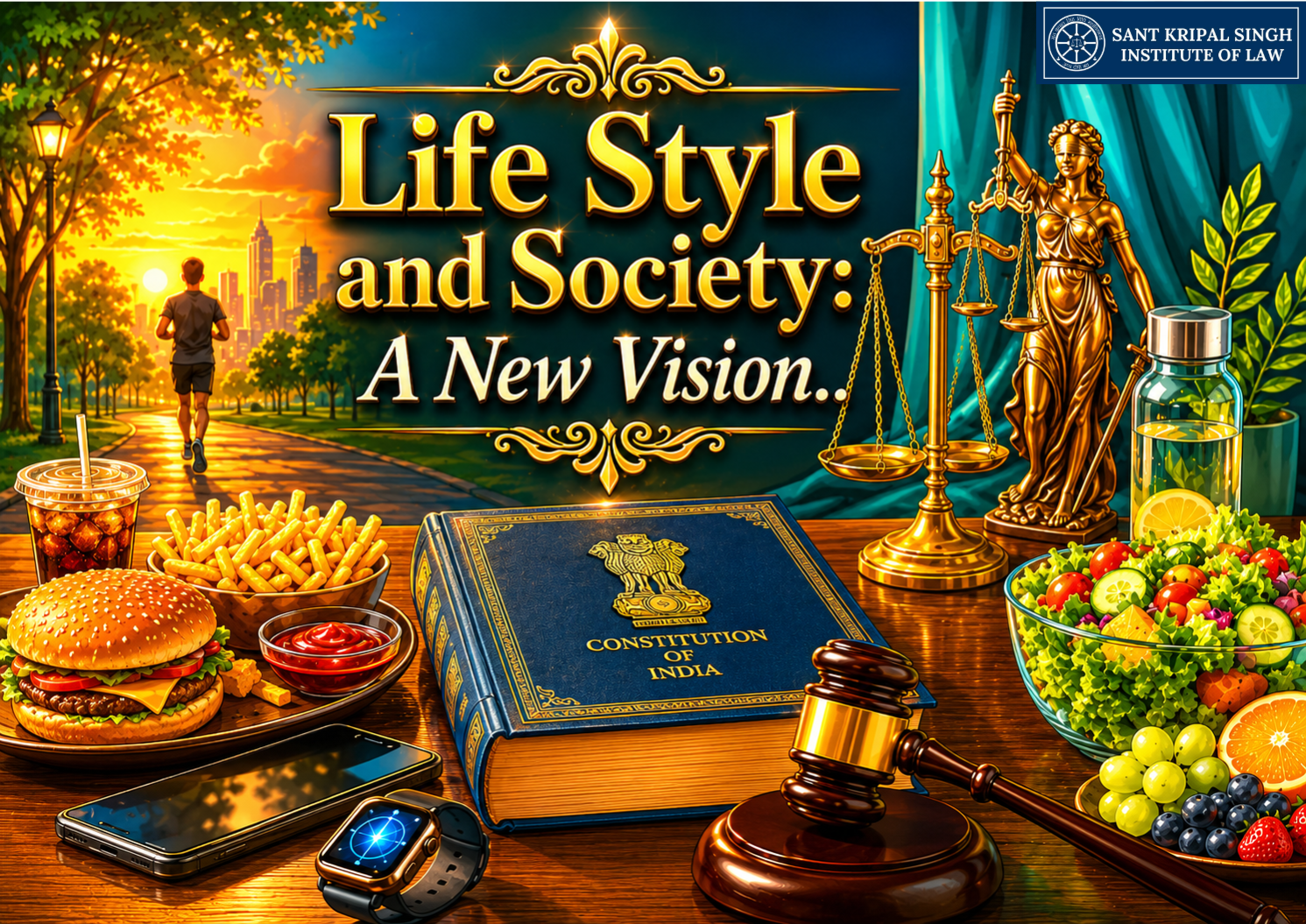
The concept of lifestyle has undergone a drastic transformation in the 21st century. Rapid urbanization, technological advancement, digital dependency, and changing food habits have reshaped not only individual routines but also social structures. While modern lifestyle promises convenience and comfort, it has simultaneously triggered serious health, psychological, and social challenges. This article critically examines emerging lifestyle patterns—especially new eating habits—and their adverse impact on health and society, while also exploring the legal and constitutional dimensions connected with public health and social welfare.
Lifestyle is no longer merely a personal choice; it is a social phenomenon shaped by globalization, consumerism, and technology. From traditional home-cooked meals to instant food culture, from outdoor interaction to virtual connectivity, society has shifted dramatically.
In India, these changes are visible in metropolitan cities as well as small towns. The question that arises is: Is modern lifestyle truly progressive, or is it silently weakening social and physical well-being?
A new vision is required—one that balances development with health, rights with responsibilities, and freedom with regulation.

Changing Food Habits and Health Impact
One of the most visible changes in modern society is in eating patterns. Traditional, home-cooked, balanced diets are increasingly replaced by fast food, processed meals, and sugary beverages. The culture of online food delivery has made unhealthy options easily accessible, especially to students and working professionals.
This shift has led to a rise in lifestyle diseases such as obesity, diabetes, hypertension, and heart problems—even among young people. Sedentary routines, reduced physical activity, and irregular meal timings further aggravate the problem. What appears to be convenience today may become a public health crisis tomorrow.
Digital Lifestyle and Social Change
Technology has improved communication, but excessive screen time has weakened real-life interaction. Social media dependency, work-from-home stress, and virtual relationships often lead to anxiety, loneliness, and reduced family bonding.
Modern society is becoming more connected digitally but emotionally distant socially. This silent transformation affects mental health and overall well-being.
Legal and Constitutional Perspective
Lifestyle is not merely a private matter; it has legal implications.
1. Right to Health under Article 21
The Constitution of India under Article 21 guarantees the Right to Life and Personal Liberty. The Supreme Court of India has interpreted this to include the Right to Health. Unhealthy food practices, misleading advertisements, and lack of regulation can indirectly affect this constitutional right.
2. Regulation of Food Safety
The Food Safety and Standards Act, 2006 regulates food quality and safety standards in India. It aims to protect public health from unsafe and substandard food products.
The Food Safety and Standards Authority of India (FSSAI) monitors labeling, hygiene, and nutritional standards.
3. Consumer Protection
Under the Consumer Protection Act, 2019, consumers have the right to be informed about product quality, ingredients, and risks. Misleading health claims in advertisements can attract legal consequences.
4. State’s Duty under Article 47
Article 47 of the Constitution imposes a duty on the State to improve public health and raise the level of nutrition. Therefore, the government must regulate unhealthy food practices and promote awareness.
Conclusion: Towards a Balanced Vision
A new vision of lifestyle must balance convenience with consciousness. Healthy eating habits, regular physical activity, limited screen time, and responsible consumption are essential for a sustainable society.
Modern development should not compromise physical health, mental well-being, or social harmony. True progress lies not merely in technological growth but in building a healthy, aware, and legally informed society.
~Prashant Singh (Assistant Professor)
Join SKSIL Law College and gain hands-on experience with the latest legal technology.